Ready for the future: a high-tech offensive
In 2025, the Federal Government Federal Government The Federal Government and cabinet is made up of the Federal Chancellor and the Federal Ministers. While the Chancellor holds the power to issue directives, the ministers have departmental powers, meaning that they independently run their respective ministries in the framework of those directives… Read more › launched the High-Tech Agenda Germany (HTAD) - an innovation offensive aimed at boosting competitiveness, value creation and technological sovereignty. The HTAD involves collaboration between politics, academia and business and is based on three pillars:
- six priority key technologies
- five strategic research fields
- nine levers to additionally increase innovative potential
Key facts about the High-Tech Agenda Germany at a glance
It is intended to bundle promising approaches in Germany with a view to strengthening the country’s capacity for innovation, maintaining its competitiveness and safeguarding its prosperity. For this to succeed, all relevant stakeholders - at both national and European levels - will join forces to ensure that Germany is a strong, technologically sovereign nation of innovation.
The High-Tech Agenda Germany is being implemented via technology-specific roadmaps and concrete flagship projects. The Federal Ministry of Research, Technology and Space (BMFTR) is helping create the necessary framework, for example by providing
- High-Tech Spaces: regional innovation spaces in which the public sector, science and industry collaborate to develop and test technologies and put them into practice
- an AI Robotics Booster: a funding package intended to make Germany internationally competitive in the area of AI-based robotics and to accelerate the transfer of research into industrial applications
- new funding instruments designed to strengthen the links between research, development and application
The High-Tech Agenda Germany is concentrating on six key technologies and taking targeted action to advance their research and application:
- Artificial Intelligence (AI)
- Quantum Technologies
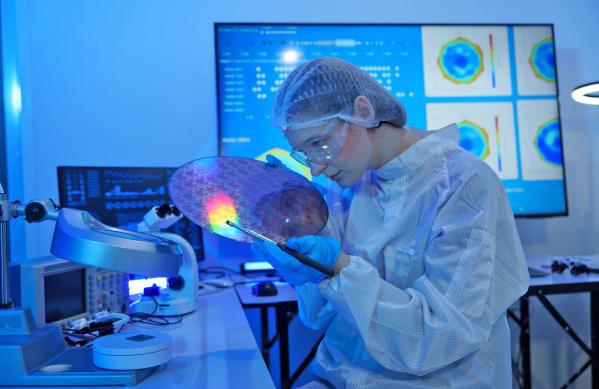
- Microelectronics
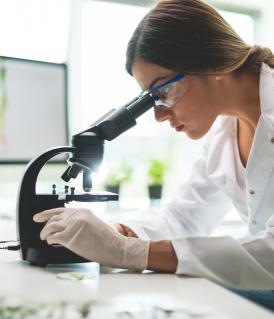
- Biotechnology
- Fusion and Climate-Neutral Energy Generation
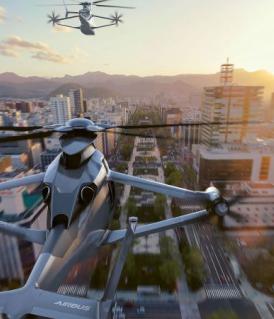
- Technologies for Climate-Neutral Mobility
They complement the key technologies, with both mutually influencing the other.
- Aerospace
- Health Research
- Security and Defence Research
- Marine, Climate and Sustainability Research
- Humanities and Social Sciences
The levers are as follows:
- accelerate the transfer of knowledge and technology
- ease the burden of bureaucracy
- establish new financing instruments
- strengthening resilience in the science system
- attracting skilled labour and talent
- expand European and international cooperation
- ensure the supply of critical raw materials
- invest strategically in research infrastructure
- strengthen civil-military collaboration
The Federal Government Federal Government The Federal Government and cabinet is made up of the Federal Chancellor and the Federal Ministers. While the Chancellor holds the power to issue directives, the ministers have departmental powers, meaning that they independently run their respective ministries in the framework of those directives… Read more › is making around 6 billion euros available for all six key technologies.
The best example of how the three pillars result in concrete progress are the six key technologies. With each of these technologies, the Federal Government Federal Government The Federal Government and cabinet is made up of the Federal Chancellor and the Federal Ministers. While the Chancellor holds the power to issue directives, the ministers have departmental powers, meaning that they independently run their respective ministries in the framework of those directives… Read more › is pursuing specific goals and opening up new opportunities for business and society.
The six key technologies of the High-Tech Agenda Germany
The High-Tech Agenda Germany is concentrating on six key technologies and taking targeted action to advance their research and application.
AI increases productivity and innovative capacity – by making (sovereign, secure and human-centred) AI itself, Germany wants to play a central role:
- By 2030, 10 percent of economic output is to be generated by AI.
- From 2026, the AI Robotics Booster will lead to the creation of test and training centres for multi-purpose robots.
- In Germany alone, AI offers up to 400 billion euros of annual value creation potential.
They create new opportunities in data processing, sensor technology, medicine and communication. Germany wants to become a leading centre for quantum technologies:
- By 2030, there are to be at least two error-corrected quantum computers at top European level.
- By 2030, quantum sensors are to enable diseases to be detected earlier.
- The “Quantum Future Professionals” initiative will establish the necessary expertise – by providing vocational training Vocational training Dual vocational training is quite unique internationally. After leaving school, many young people follow one of more than 300 state-recognised apprenticeship training programmes under the dual system. This entry into professional life differs from vocational training based only in colleges such as… Read more › and supporting young talent.
It lies at the heart of modern technology - the independent development of microchips is essential for Germany’s economy and security:
- With microchips designed in Germany, Germany wants to become a European centre for microchip design.
- A “Lab to Fab” accelerator is to promote the transfer of research into production - including for small and medium-sized businesses.
- The new Microtec Academy will strengthen the skilled labour basis, while secured supply chains will reduce critical dependencies.
It is improving medicine, agriculture and nutrition:
- Germany is to become a cutting-edge centre for health research.
- A translation hub for gene and cell therapies is to make novel treatments possible for previously incurable diseases.
- Resilient agricultural and food supply systems will be created via funding programmes that transfer research into application, such as “GO-Bio next”.
Fusion releases huge amounts of energy - one gram of fuel supplies roughly the same as around eleven tonnes of coal.
- Germany is to become a leading innovative hub for fusion technologies, with German companies to become world market leaders.
- The first step involves paving the way to Germany’s first fusion reactor - along with the requisite technologies.
- One hub for magnetic fusion and one hub for laser fusion will pool research and technology trials, complemented by new real-world energy transition labs, a deep geothermal research initiative and the Hydrogen4Future hydrogen hub.
- By 2035, a competitive battery production and closed-loop recycling system is to be created in Germany, embedded within a European network.
- The HTAD promotes the development of e-fuels and other technologies, as well as research on environmentally friendly aviation and shipping.
- Since 2026, model regions have been created for the mobility of the future. Germany also plans to invest massively in new AI- and data-based solutions for mobility.