Freedom of Religious Worship
Freedom of religion or belief is enshrined in the Basic Law The Basic Law The Basic Law determines that Germany is a constitutional state: All state authorities are subject to judicial control. Section 1 of the Basic Law is of particular relevance. It stipulates that respect for human dignity is the most important aspect of the constitution: “Human dignity shall be… Read more › in Germany. Article 4 of the constitution states that “freedom of faith and of conscience and freedom to profess a religious or philosophical creed shall be inviolable”. This includes the freedom to profess and practise a religion, along with the freedom not to profess any religion.
How many Christians live in Germany?
Germany’s religious landscape is increasingly shaped by diversity and secularisation.
According to Church statistics, the Roman Catholic Church has around 19.8 million members, while nearly 18 million people belong to the Protestant Church. In addition, some 285,000 people belong to Protestant free churches, while 366,000 are members of other Christian churches and communities and around 3.85 million belong to Orthodox churches. The two major Christian denominations are organised into 27 Roman Catholic dioceses and the German Bishops’ Conference, and into the Protestant regional churches under the umbrella organisation of the Protestant Church in Germany (EKD).
With 19.8 million members in Germany, the Roman Catholic church belongs to the worldwide church with the Pope at its head. The EKD is the association of the 20 independent regional Lutheran, Reformed and United churches. With around 18 million members, it includes the majority of German Protestant Christians. Around 50.1% of the population are of different faith or do not belong to any religious denomination.
What role does Islam play in Germany?
Migration is making Islam an increasingly significant part of religious life. While no definitive survey has been carried out, the number of Muslims in Germany has been estimated to be between 5.3 and 5.6 million, with roots in 50 different nations. Large Muslim communities have grown up in many cities. Established in 2006, the German Islam Conference (DIK) provides an official framework for exchange between the state and Muslims. Furthermore, German universities offer imam training programmes.
How many Jews live in Germany?
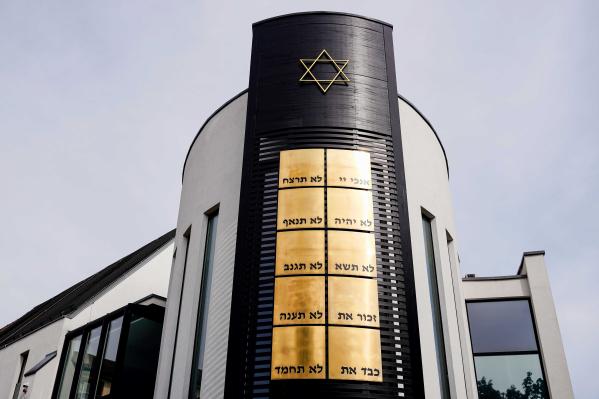
Jewish life in Germany, which was entirely destroyed by the Holocaust, is once again firmly rooted in Germany. It is estimated that 200,000 Jews live in the Federal Republic of Germany today. Around 90,000 of them are members of some 100 Jewish communities that cover a broad religious spectrum and are represented by the Central Council of Jews in Germany, which was founded in 1950.
How does the state work together with religious communities in Germany?
Germany does not have an established church. Instead, the state works with religious communities as partners. The state contributes to funding kindergartens and schools that are sponsored by religious communities. The churches levy a church tax which is collected by the state to fund social, medical and other services. Schools must provide religious education as part of their standard curriculum, although restrictions to this apply in Berlin Berlin Once a year, during the Berlinale film festival, the world of the silver screen focuses its attention on Berlin. And the city’s inhabitants are used to global interest. After all, the people of Berlin have lived in a capital city since 1458. However, there is also a shady side to the city’s history… Read more › and Bremen Bremen The Hanseatic city of Bremen arose through classic maritime trading, in particular with coffee. In the smallest of the federal states (divided into the city of Bremen, and Bremerhaven, some 60 kilometers to the north) the port accounts for every fifth job. The largest private employer, however, is… Read more › .
The teaching of Islam as part of religious education is being expanded. Additional teachers are being trained to ensure that Muslim children and young people who attend school in Germany can be offered religious.