Structuring Immigration

The Federal Government Federal Government The Federal Government and cabinet is made up of the Federal Chancellor and the Federal Ministers. While the Chancellor holds the power to issue directives, the ministers have departmental powers, meaning that they independently run their respective ministries in the framework of those directives… Read more › is increasing rates of immigration Immigration As early as the 19th century Germany attracted a large number of immigrants and since the 1950s has emerged as the European country with the largest immigrant population. In 1950, there were about 500,000 foreigners in Germany, accounting for a mere one percent or so of the population. This has… Read more › for skilled professionals from around the world. It embraces its humanitarian responsibility for refugees and asylum seekers who have been forced to flee from regions in crisis or conflict. At the same time, it is keen to control and limit migration to a greater extent, for example by
- temporarily suspending the family reunification rights of those with subsidiary protection status
- ending voluntary admission programmes for refugees
- designating more countries of origin as safe
- entering into further migration and readmission agreements
Migration and integration: facts and figures
In 2024 there were around 14.1 million holders of foreign passports living in Germany.
In 2024, around 21.2 million people in Germany came from a migrant background. That’s roughly one in four of the population.
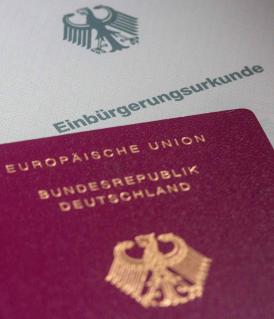
Around 9.3 million people of migrant background had a German passport in 2024. They either had German citizenship since birth, were ethnic Germans who moved to Germany from the former Eastern Bloc or were nationalised.
In 2024, nearly 292,000 people were naturalised as German citizens.
What role do skilled international professionals play in Germany?
Migrants make a significant contribution to Germany’s social and economic development. The growing need for skilled workers is attracting well qualified people from abroad. The Federal Government Federal Government The Federal Government and cabinet is made up of the Federal Chancellor and the Federal Ministers. While the Chancellor holds the power to issue directives, the ministers have departmental powers, meaning that they independently run their respective ministries in the framework of those directives… Read more › wants to facilitate increased migration, not least to counteract the shortage of skilled workers which is due to demographic change.
In addition to boosting the activation of Germany's own pool of potential skilled workers and encouraging greater immigration Immigration As early as the 19th century Germany attracted a large number of immigrants and since the 1950s has emerged as the European country with the largest immigrant population. In 1950, there were about 500,000 foreigners in Germany, accounting for a mere one percent or so of the population. This has… Read more › from EU member states, the Federal Government sees the migration of skilled workers from third countries as a means of counteracting demographic change and helping ensure there are enough skilled workers. To this end, Germany reformed its Skilled Immigration Immigration As early as the 19th century Germany attracted a large number of immigrants and since the 1950s has emerged as the European country with the largest immigrant population. In 1950, there were about 500,000 foreigners in Germany, accounting for a mere one percent or so of the population. This has… Read more › Act in 2023, introducing among other things the “Opportunity Card”. This visa enables qualified professionals who fulfil certain conditions to come to Germany for a year to search for work. In the first year after the Opportunity Card was introduced, around 11,500 such visas were granted.