How do people vote in Germany?
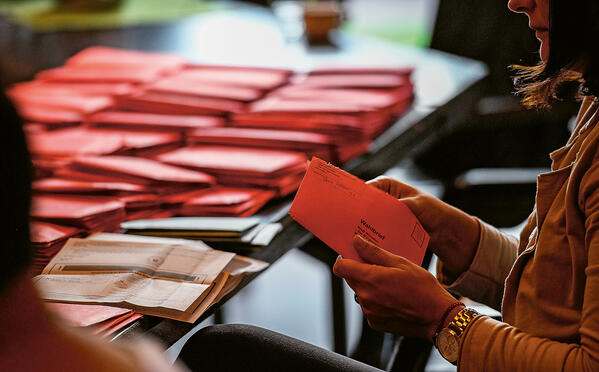
Why are elections held regularly in Germany?
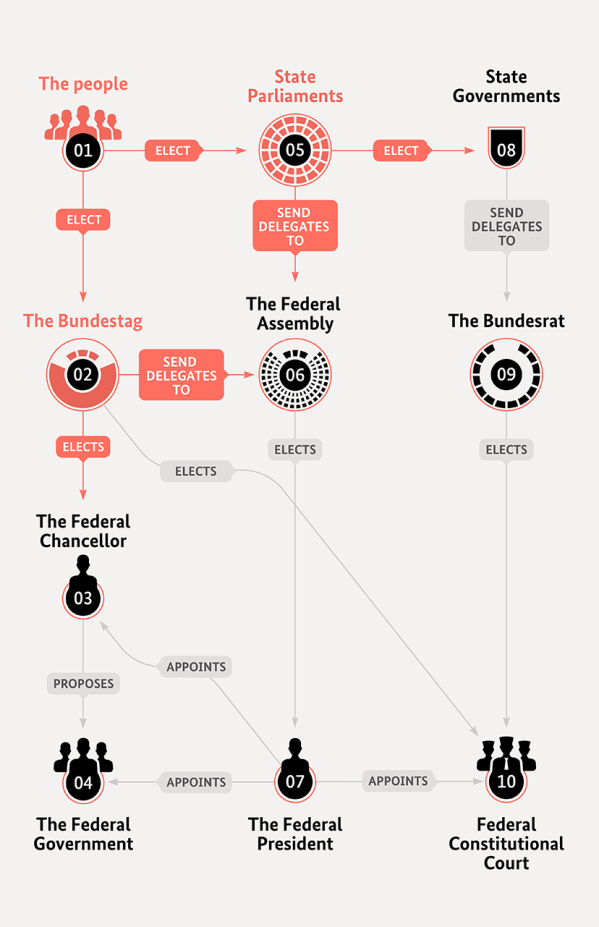
Free and fair elections Elections Every four years, the parties stand in the general elections to the Bundestag. Traditionally, the turn-out is high in Germany, and following a high in the 1970s, when the turn-out was over 90 percent, since reunification it has been around 80 percent. 76.6 per cent of eligible voters took part… Read more › are an essential precondition for any democracy. They are a key instrument for the political participation of citizens. The German Basic Law states that the representatives must be elected through general, direct, free, equal and secret elections.
Which basic rules apply to elections in Germany?
All citizens who are eligible to vote, irrespective of their gender or income, have the vote, their voting decision must not be influenced - and every vote counts equally. Voters must be at least 18 to vote in Bundestag elections Elections Every four years, the parties stand in the general elections to the Bundestag. Traditionally, the turn-out is high in Germany, and following a high in the 1970s, when the turn-out was over 90 percent, since reunification it has been around 80 percent. 76.6 per cent of eligible voters took part… Read more › , while 16 is the minimum age for local Landtag and municipal elections in some states. Secret elections guarantee that every voter can cast their vote unobserved and on their own.
How often are elections held in Germany?
The German Bundestag is normally elected every four years. Elections Elections Every four years, the parties stand in the general elections to the Bundestag. Traditionally, the turn-out is high in Germany, and following a high in the 1970s, when the turn-out was over 90 percent, since reunification it has been around 80 percent. 76.6 per cent of eligible voters took part… Read more › are generally held every five years in the 16 federal states Federal states Germany is a federal state. Both the central federal government and the 16 federal states have independent areas of jurisdiction. The government in Berlin is responsible for foreign policy, European policy, defense, justice, employment, social affairs, tax and health. The federal states are… Read more › . Then there are municipal elections Elections Every four years, the parties stand in the general elections to the Bundestag. Traditionally, the turn-out is high in Germany, and following a high in the 1970s, when the turn-out was over 90 percent, since reunification it has been around 80 percent. 76.6 per cent of eligible voters took part… Read more › , which usually also take place every five years, to elect for example city parliaments.
How is Germany’s federal president elected?
The federal president isn’t elected directly by the people, but every five years by the Federal Convention. The Federal Convention is made up of all the members of the Bundestag The Bundestag The Bundestag is made up of the elected representatives of the German people. In principle elections to the Bundestag are proportionally representative, with each party’s share of the vote in the election reflecting the number of seats it occupies in the parliament. But the electoral system also… Read more › and an equal number of delegates elected by the state parliaments. These delegates can also be members of the public such as artists or scientists.
What is a Landtag election?
A Landtag election gives the people in a particular federal state the opportunity to elect their political representatives. A Landtag is the parliament of a Bundesland, i.e. a federal state. The equivalent bodies in Germany’s city-states are known as the Abgeordnetenhaus in Berlin Berlin Once a year, during the Berlinale film festival, the world of the silver screen focuses its attention on Berlin. And the city’s inhabitants are used to global interest. After all, the people of Berlin have lived in a capital city since 1458. However, there is also a shady side to the city’s history… Read more › and the Bürgerschaft in Bremen Bremen The Hanseatic city of Bremen arose through classic maritime trading, in particular with coffee. In the smallest of the federal states (divided into the city of Bremen, and Bremerhaven, some 60 kilometers to the north) the port accounts for every fifth job. The largest private employer, however, is… Read more › and Hamburg Hamburg In the city and state of Hamburg it is the port that is the power-house of the economy, though with Airbus, Otto Versand and Beiersdorf also located here, this is not immediately apparent. The tanker terminals, mean that almost all the major oil-refining companies are represented in the port. For… Read more › .
Who elects the state government?
The citizens of the state in question elect the members of the Landtag, who in turn elect the state premier, the Ministerpräsident. He or she then forms a state government made up of ministers. Normally, parties cannot govern alone at state or federal level but need to form a coalition with one or more other parties.