Committed Civil Society
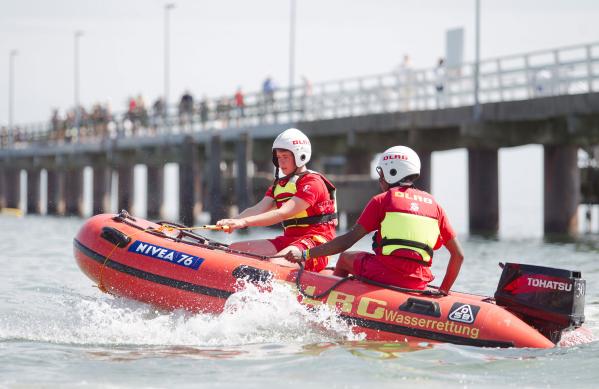
Around 29 million people in Germany – just under 40% of the entire population – take social responsibility by volunteering in their free time. The figure has grown appreciably over the past 20 years, from around 31% in 1999. According to the 5th German Volunteer Survey, which was published in 2021, around 60% of respondents commit up to 2 hours a week to volunteering, with 17% volunteering for 6 or more hours. A key finding of the study was that volunteering takes many forms and a wide range of groups benefit from it. Most volunteers contribute to sport and exercise, followed by culture and music, social projects and services, and schools and nurseries.
How many clubs and associations are there in Germany?
The term “civil society” refers to the part of society which is not part of the government or a political party, but rather acts in a voluntary and public capacity to take action on social and political issues. Clubs and associations play a significant role when it comes to voluntary action. Together with charities, churches, cooperatives, aid organisations, non-profit organisations and private initiatives, the members of Germany’s more than 620,000 clubs and associations form the backbone of the “third sector”.
Which role do foundations play in civil society engagement?
Charitable foundations in particular are becoming increasingly significant. With more than 26,000 foundations with legal status according to civil law - the conventional legal form for foundations - Germany is one of the European countries with the most foundations. More than 700 new foundations were established in 2024 alone. On average, there are 31.6 foundations for every 100,000 inhabitants in Germany. 89 percent of foundations with legal status according to civil law pursue solely non-profit activities - no small number of them having been doing so for centuries. The five largest foundations governed by private law, based on their expenditure, are the following:
- the Volkswagen Foundation,
- Stiftung Liebenau,
- the RAG-Stiftung,
- Evangelische Stiftung Alsterdorf,
- BruderhausDiakonie. Stiftung Gustav Werner und Haus am Berg
Community foundations are a growing force, where members of the public act as joint funders to support local or regional projects. The first foundations of this kind were established in 1996. These days there are 426 community foundations in Germany, 244 of them bearing the seal of approval of the Association of German Foundations.
How is civic engagement developing in Germany?
While levels of involvement in social projects and organisations have increased slightly in recent years, the main shift has been away from larger associations and towards small, independently organised groups and project-focused activities. One particularly significant period was during the major influx of refugees in 2015 and 2016, when many people in Germany volunteered through local initiatives to support the asylum seekers. The Covid-19 pandemic saw the emergence of new forms of voluntary activities, such as going shopping for people in at-risk groups.
Sport and volunteering: sports clubs in Germany
The German Olympic Sports Confederation records more than 86,000 sports clubs with more than 28 million members in total.
8.7 million volunteers help out in organised sporting activities, while 6.3 million helpers provide support at club festivities, tournaments and other events. In 20 percent of sports clubs, people with a migrant background perform voluntary work. Between them, volunteers at management and operational levels chalk up 23 million hours of work per month in total.
More than 7 million children and youngsters below the age of 18 belong to a sports club in Germany. As such, they account for a quarter of all club members and are the largest age group in club sport.