Security in Germany
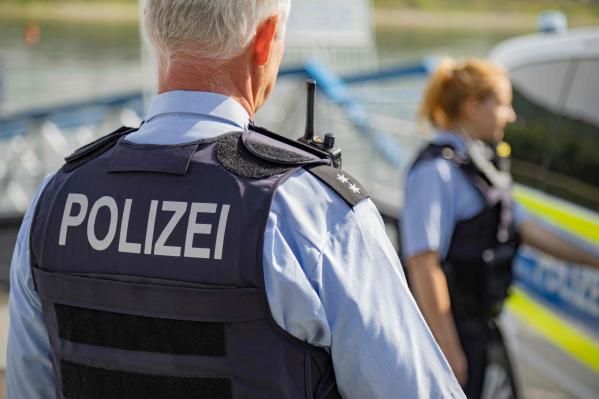
Germany is one of the safest countries in the world. In the Global Peace Index, which uses a variety of indicators to assess the degree of freedom in 163 of the world’s countries, Germany is regularly among the highest-ranked countries. It ranked 20th in 2025, the leading group showing only marginal differences in scores in some cases. According to the Police Crime Statistics, 5.8 million criminal offences were recorded in Germany in 2024, with a clear-up rate of around 58 percent.
As in all countries, the investigative authorities in Germany are also increasingly facing the risks posed by cybercrime. Especially cross-border crime in the virtual sphere requires international cooperation. Against this backdrop, Germany cooperates with the European Cybercrime Centre at Europol, among others.
Who is responsible for police work in Germany?
As a matter of principle, given Germany’s federal structure the federal states are responsible for policing. The German Basic Law stipulates, however, that specific duties shall be discharged at federal level. Federal police authorities are
- the German Federal Police Force and
- the Federal Criminal Police Office (BKA).
The Federal Police Force is responsible, above all, for protecting the country’s borders and is deployed, for example, at railway stations and airports. The BKA concerns itself, amongst other things, with politically motivated violence and terrorism. In these areas, Germany again works closely with the security services in other countries and with international organizations such as Interpol.
Are German police officers also deployed internationally?
German police officers are also deployed in countries in crisis or conflict such as Armenia and Somalia. Usually as part of an EU or UN mission, they train local security personnel and/or strengthen the mechanisms underpinning the rule of law and human rights Human rights The respect and strengthening of human rights worldwide are a cornerstone of German Federal Government policy. Together with its EU partners it is committed to protecting and continually advancing human rights standards throughout the world. This occurs in close collaboration with the institutions… Read more › .
Germany’s commitment to international police missions
Such missions include deployments of police officers (and civilian experts) in crisis regions worldwide – for example to advise, train, observe or carry out executive duties as part of UN or EU mandates.
The Federal/State Working Group “International Police Missions” (AG IPM) is a permanent body of the Standing Conference of German Interior Ministers (IMK) and organises deployments from implementation to post-mission briefings.
ZIF, which was established in 2002 and operates on behalf of the Federal Foreign Office, makes civilian experts available for peace missions, humanitarian operations or election observation.
Germany sends teams to places such as the Sahel region, the Horn of Afrika and Iraq, as well as to countries including Kosovo, Moldova, Armenia, Georgia and Ukraine. Among other things, its goals are to strengthen the capacity of local security agencies to fight terrorism and organised crime and to help establish integrated border management and citizen-oriented police work.
In 2024, 123 German police officers were deployed in EU and UN missions abroad – a year-on-year increase of 24.2 percent. The Federal Government Federal Government The Federal Government and cabinet is made up of the Federal Chancellor and the Federal Ministers. While the Chancellor holds the power to issue directives, the ministers have departmental powers, meaning that they independently run their respective ministries in the framework of those directives… Read more › is planning to maintain or even expand this engagement.