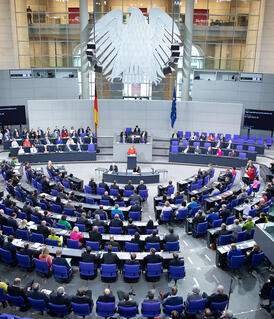
Freedom of expression in Germany: provocation is permitted, hate speech is not
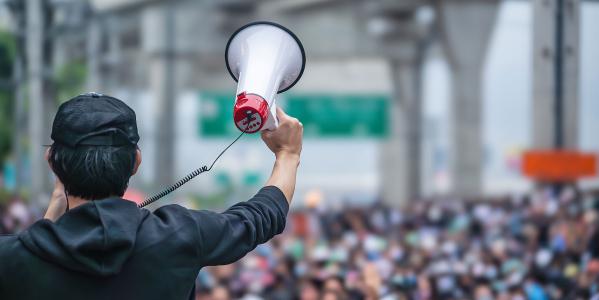
Freedom of expression applies in Germany. This is enshrined in Article 5 of the Basic Law, Germany’s constitution. It states: “Every person shall have the right freely to express and disseminate his opinions in speech, writing and pictures.” The right to express political and other opinions is protected in principle, in other words. This also applies to provocative or pointed remarks.
What is the situation in terms of freedom of the press in Germany?
Freedom of expression is closely related to freedom of the press. On this subject, Article 5 of the Basic Law states: “Freedom of the press and freedom of reporting by means of broadcasts and films shall be guaranteed. There shall be no censorship.” In international rankings, Germany is seen as enjoying a comparatively high degree of freedom of the press. In 2025, the US non-governmental organisation Freedom House classified Germany as “free”, scoring it 95 out of a possible 100 points. The World Bank’s Press Freedom Index, compiled by Reporters Without Borders, ranked Germany eleventh out of 181 countries in 2025.
What is permitted in the name of art in Germany?
Freedom of the arts is also related to freedom of expression. Satire – even of a caustic nature – is allowed. Artists in areas such as cabaret and caricature are free to criticise those in government and make fun of them without having to fear any consequences.
Where are the limits to freedom of expression in Germany?
There are limits to freedom of expression in Germany. Above all, these apply when remarks would damage a person’s honour or violate their human dignity. Statements intended to incite hatred are not permitted either. Having learnt a lesson from its Nazi past, Germany penalises such statements in a dedicated paragraph in the country’s criminal code. These include statements intended to incite hatred and violence towards specific groups and those that deny or glorify Nazi crimes. Courts decide in individual cases whether a particular remark crosses the line between permissible expression of opinion and unlawful hate speech.
Which rules regarding freedom of expression apply on the internet?
The rules regarding freedom of expression and its limits apply both in the online and offline domains. Hate speech on the internet can also be prosecuted. Since 2024, the Digital Services Act has been in force in Germany, as in the European Union European Union In 1957, Germany was one of the six founding members of today’s EU, along with France, Italy, Belgium, the Netherlands and Luxembourg. The EU is currently made up of 27 states; the euro is the official currency in 20 of them. For Germany, European integration forms the basis for peace, security and… Read more › as a whole. Among other things, it requires operators of digital services, such as social media networks, to make it easy for their users to report illegal content.